
Passivation Services
Corrosion Protection for Stainless Steel Component
Stainless Steel Passivation for Corrosion-Critical Applications
Enhance corrosion resistance by removing free iron and restoring the protective oxide layer—without changing dimensions.
What Is Passivation?
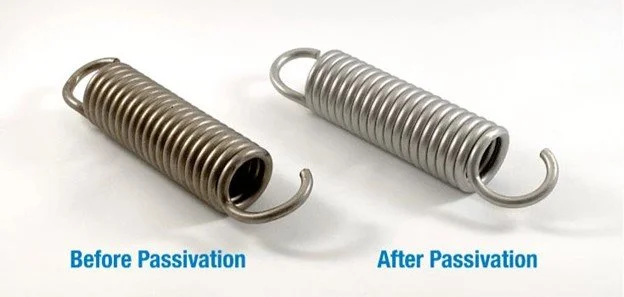
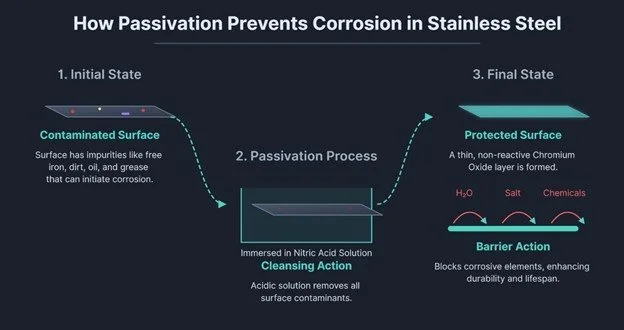
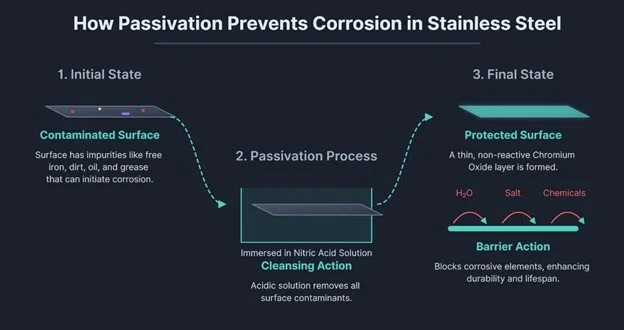
Passivation is a chemical treatment process that removes free iron contamination from stainless steel and enhances the formation of a protective chromium oxide layer.
👉 Unlike coatings:
❌ No added thickness
❌ No visual change (in most cases)
✅ Improves corrosion resistance
✅ Critical after machining
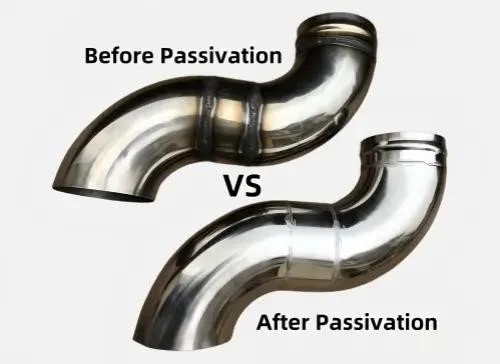
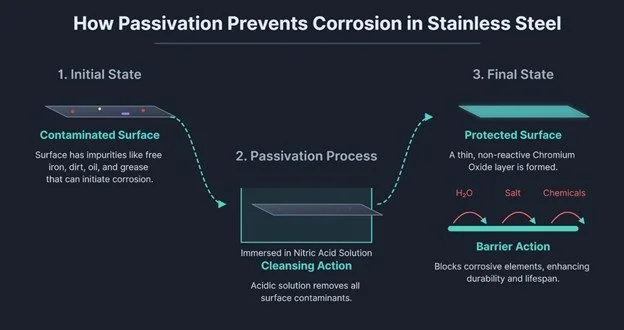
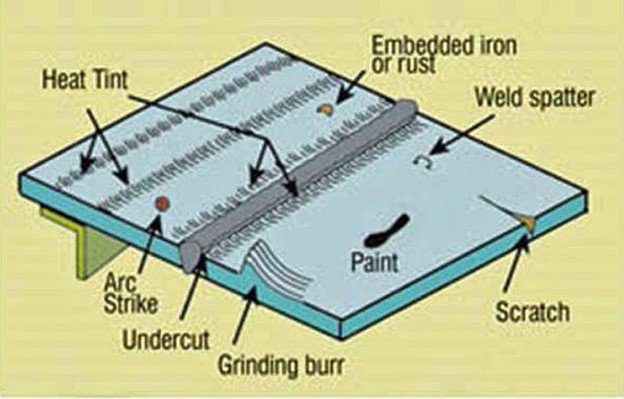
What Is Passivation?
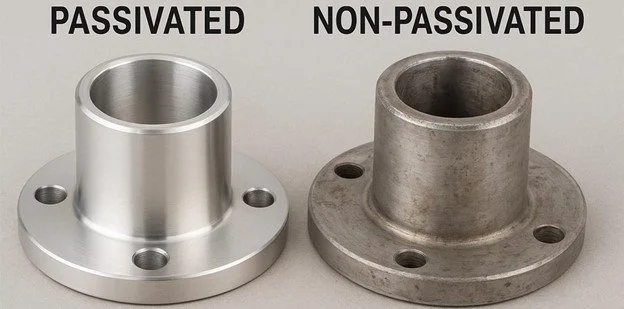
What Happens Without Passivation:
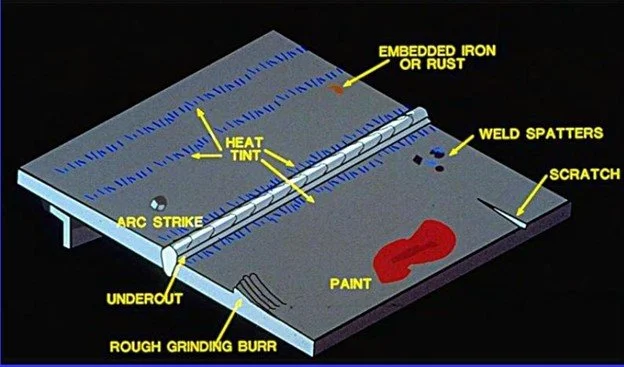
Free iron from tooling embeds in surface
Leads to:
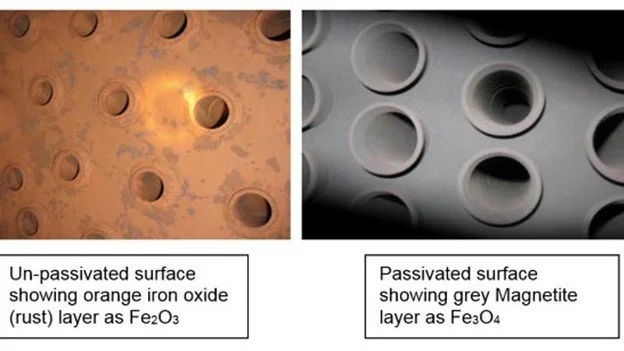
Rust spots
Pitting
Premature corrosion failure
What Passivation Does:
Removes embedded iron
Restores corrosion resistance
Stabilizes surface chemistry
🔷 MIL-SPEC & INDUSTRY STANDARDS (CRITICAL)
These are search magnets + required for aerospace/defense work:
ASTM A967
AMS 2700
Common Methods:
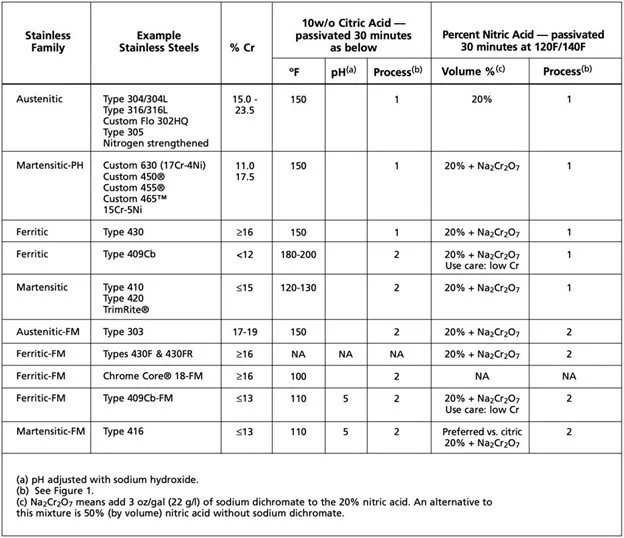
Nitric acid passivation
Citric acid passivation (modern, environmentally preferred)
🔷 WHEN ENGINEERS SHOULD SPECIFY PASSIVATION
✔ Required When:
Stainless steel is machined or fabricated
Parts are used in corrosive environments
Aerospace / defense / medical applications
Welded assemblies
⚠️ Often Missed:
“Machined stainless steel is NOT corrosion resistant until properly cleaned and passivated.”
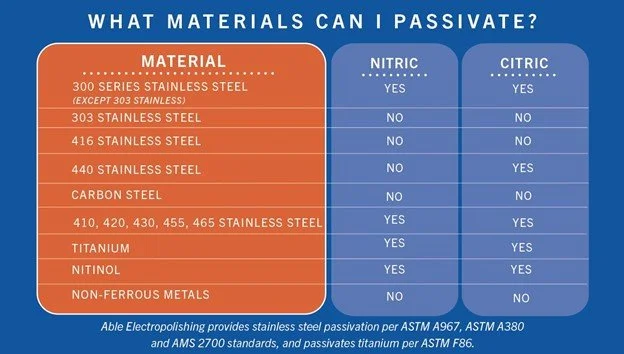
Material Compatibility
PASSIVATION PROCESS (SIMPLIFIED)
Cleaning (remove oils, debris)
Acid bath (nitric or citric)
Rinse
Dry
👉 No coating is applied — surface is chemically improved
Design For Passivation
1
Contamination Sources
• Steel tooling contact
• Cross-contamination in machining
• Handling contamination
👉 Solution:
• Dedicated tooling or cleaning
• Mandatory passivation step
2
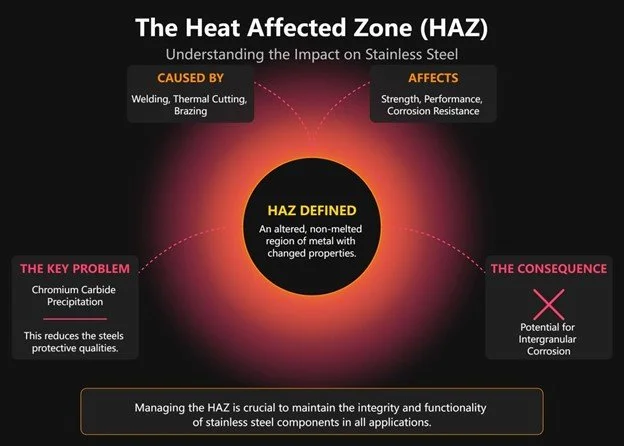
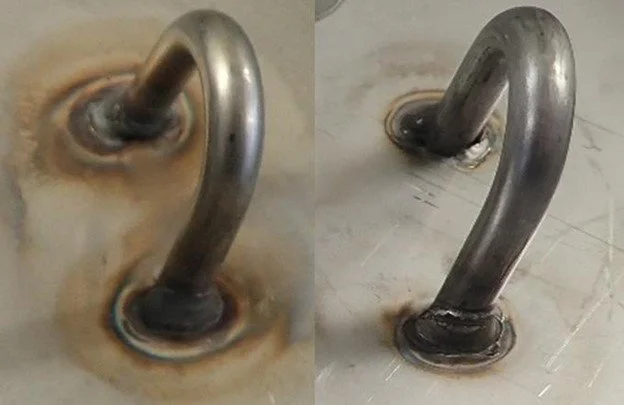
Weld Zones (High Risk)
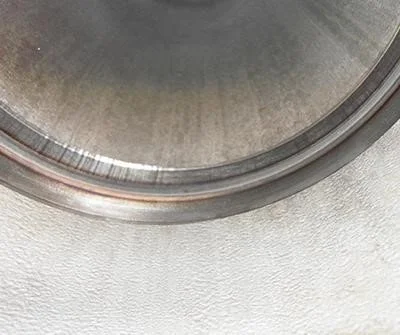
• Heat-affected zones lose corrosion resistance
• Must be cleaned + passivated
3
Surface Finish Impact
• Rough surfaces trap contaminants
• Smoother finishes = better corrosion performance
4
False Assumption
❌ “Stainless steel doesn’t rust”
✅ “Stainless steel resists corrosion when properly treated”
Passivation VS Other Finishes
Common Failures
What Goes Wrong:
Rust spots after machining
Pitting corrosion
Failed salt spray tests
“We identify passivation requirements during quoting.”
Industries That Require Passivation
Aerospace
Defense
Medical devices
Food processing
Marine environments
Data centers (cooling systems, stainless hardware)

Ready to Start Your Project?
Take the next step toward precision manufacturing with Max Machining. Whether you have a 2D drawing, a 3D model, or just a concept, our team is ready to provide a fast, accurate quote and guide your project from design to production. Partner with a compliant, trusted, and experienced manufacturing team that delivers quality, speed, and reliability every time.